What Is Sculpture? Noguchi’s Akari at 75 is No Ordinary Light
“Akari is no ordinary light.”
Seventy-five years after Isamu Noguchi transformed the traditional Japanese lantern into luminous sculpture, his words remain as relevant as ever. On what would have been the artist’s 122nd birthday on November 17, a visit to The Noguchi Museum in New York feels especially fitting.


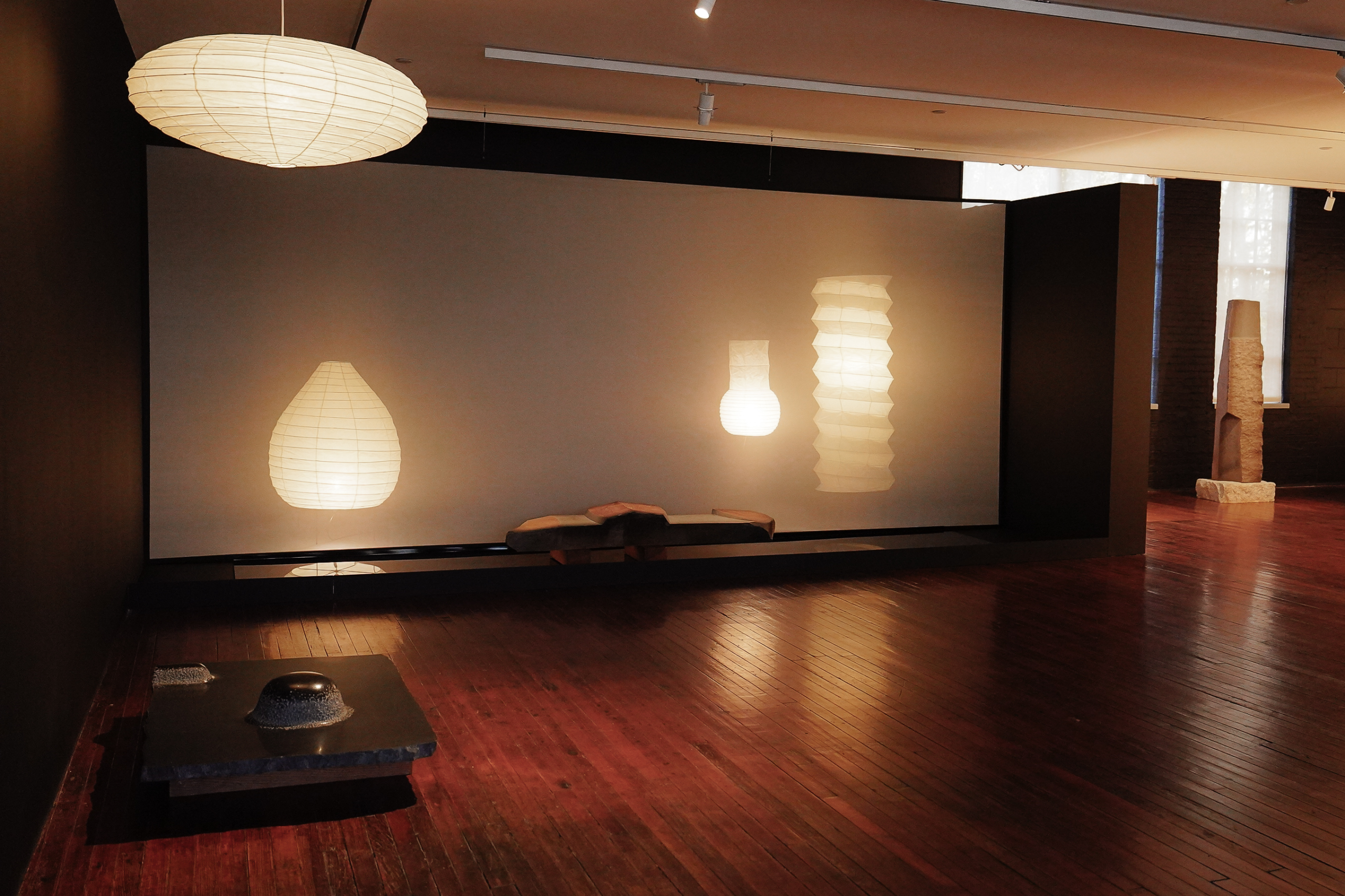
No Ordinary Light: Akari at 75, on view through September 5, 2027, traces Noguchi’s lifelong experimentation with light, nature, and the relationship between sculpture and its surroundings. Bringing together delicate paper lanterns with substantial works in stone, metal, and clay, the exhibition revisits an idea central to his practice: sculpture does not become any less a work of art simply because it serves a purpose.
Art Was Always Meant to Be Lived With
During a visit to Gifu, Japan, in 1951, Noguchi began reimagining the traditional chochin lantern. He preserved its handmade paper and bamboo construction while replacing candles with electric bulbs and ornate wooden bases with slender metal supports. What followed was more than three decades of experimentation and over 200 distinct Akari designs.
The Japanese word Akari refers to light, but for Noguchi, it also suggested weightlessness. He wanted his sculptures to be as “movable as butterflies,” their delicate forms a striking contrast to the permanence of his monumental stone works.
Their accessibility was intentional. Akari could be packed into compact boxes, transported easily, and introduced into ordinary homes. The playful, modular packaging was itself part of the design, reflecting Noguchi’s belief that art could be both sophisticated and approachable.
He was equally deliberate about presenting Akari alongside his more substantial sculptures, even when critics failed to appreciate the relationship between the two. The contrast between weight and weightlessness, permanence and movement, was precisely the point.
There is something rather wonderful about that artistic stubbornness, despite the fact that it was even rumoured to have lost him a critical award at one time for his display of Akari alongside his more traditional sculpture work. Noguchi wasn’t particularly interested in accepting conventional distinctions at the time between fine art and functional design. He understood both as expressions of the same creative philosophy and continued exhibiting them together, regardless of reception or harsh cricital words against this persuasion.
His question was deceptively simple: why should function diminish sculpture?


Between Nature and Sculpture
Noguchi described Akari as a “luminous sculpture” that “comes to life in how it is shown, in how it is in relation to people’s lives and in relation to the environment in which it is placed.”
That relationship between object and environment is especially apparent throughout the exhibition, where Akari are displayed in arrangements inspired by historical presentations, domestic interiors, and Noguchi’s own working spaces.
“So intimate is nature here it invades one’s being,” Noguchi once observed of his mountainside studio surroundings and their influence on his work.
The light sculptures seem to float within the galleries, their translucent surfaces casting a warmth reminiscent of sunlight and moonlight. Others are deliberately tethered or contained within architectural structures, exploring the tension between natural forms and human intervention.
One of the exhibition’s most compelling installations recreates a garden-like setting through delicate materials that evoke water, reflection, and rising mist.
It is an exceptionally beautiful moment, and perhaps the most memorable of the exhibition. The arrangement brings nature indoors without attempting to reproduce it literally, creating a quiet, almost meditative atmosphere that invites the viewer to linger. There is a particular luxury in that kind of stillness, especially in New York.
As part of the display and taking centre stage, the monumental Akari 200D is an exhibition highlight in its own right. One of only two edition works in existence, the massive luminous sculpture is displayed within a cubic wooden architectural setting that contrasts its soft, expansive form with the rigidity of its surroundings.
The installation reflects Noguchi’s interest in the cube as a representation of human construction, and nature as something that ultimately resists our attempts to contain it. Its sheer scale makes it fully worth the trip to the museum to witness its enormous commanding yet warm aura in person, as it entirely changes the landscape of the spacious room it sets upon.


A Living Tradition, A Lasting Influence
“A tradition that doesn’t change makes a dead tradition.”
Noguchi’s philosophy was not simply about preserving Japanese craftsmanship, but allowing it to evolve. Rather than reproducing the historic chochin, he retained its essential materials and techniques while adapting its form for modern life.
That rather stubborn philosophy remains especially relevant to Akari’s production today.
Individual models continue to be handmade by specialist artisans in Japan, with one or two craftspeople often specializing in a particular design. When a maker can no longer continue, the knowledge must be passed on and a successor trained specially in order to preserve the technique.
There is something deeply meaningful about this type of collaborative, collective effort to create a single object. Seventy-five years later, Akari are still produced through the same traditional methods, each generation of artisans carrying forward the work of those before them. The designs may bear Noguchi’s name (another way to combat more common duplicates created in the likeness of Akari styling) — but their continued existence belongs equally to the hands that make them.
The exhibition also acknowledges Akari’s influence beyond sculpture and interiors, including a memory showcasing Noguchi’s collaborative work with the fashion industry and designer Issey Miyake. It is a particularly fitting inclusion, considering the shared interest in Japanese craftsmanship, sculptural form, and the relationship between material and movement. Miyake was known globally for morphing the human physical form into art itself via innovative architectural shapes and signature micro-pleating techniques that he created in his clothing designs. Similar to Noguchi’s ribbed Akari lanterns, Miyake’s designs and pleating techniques through the years have been oft imitated but never truly replicated, and their timeless legacy also continues to live on as a minimalist wardrobe of choice for countless design and sculpture enthusiasts.
Noguchi’s particular approach to design feels remarkably relevant to fashion today, where the most compelling work often emerges from a dialogue between traditional techniques and contemporary experimentation.


Several details make the Noguchi Museum’s Akari exhibition especially rewarding:
- Sculpture without boundaries: Noguchi deliberately exhibited Akari alongside stone and ceramic works, challenging the distinction between fine art and functional design.
- A rare monumental work: The enormous Akari 200D is one of only two examples in existence, according to the exhibition curator.
- A living craft: Specialist artisans in Japan continue making Akari using techniques passed down through generations.
The museum itself is an extension of Noguchi’s philosophy. He envisioned it not simply as a place to preserve and exhibit his work, but as a cultural institution, garden, and space where people could experience art as part of their lives.
The continued availability of Akari through the museum shop is particularly fitting. These were never objects intended exclusively for distant admiration. They were designed to be used, moved, lived with, and enjoyed.
“All you need to start a home is an Akari and a tatami mat,” Noguchi once implored of those interested in the art of light.
Today, their appeal extends naturally into contemporary interiors, where a single Akari can introduce warmth and sculptural character without overwhelming a space. They are exceptionally simple objects at their core, yet their presence can transform the atmosphere of an entire room.
After visiting the exhibition, it’s difficult not to immediately yearn to incorporate Akari at home. With so many forms, sizes, and personalities, choosing a design feels emotionally personal. Each has its own relationship with light, making these sculptures as compelling to collect as they are to live with. Find your Akari, and you may also just find a tangible piece of your soul.
No Ordinary Light: Akari at 75 is on view at The Noguchi Museum in Long Island City, New York, from November 4, 2026, through September 5, 2027.
Seventy-five years later, Noguchi’s conviction remains beautifully persuasive: art needn’t be placed on a pedestal to be extraordinary.


With special thanks to the Noguchi Museum and team Kate Wiener, Curator, and Matthew Kirsch, Curator and Director of Research, for their warm welcome and walkthrough of this exciting preview.
Photography by Ailin Stimson.
Written by Laur Weeks.
Media relations courtesy of Andrey & Melissa.